

Interview: Rasmus Georgiadis
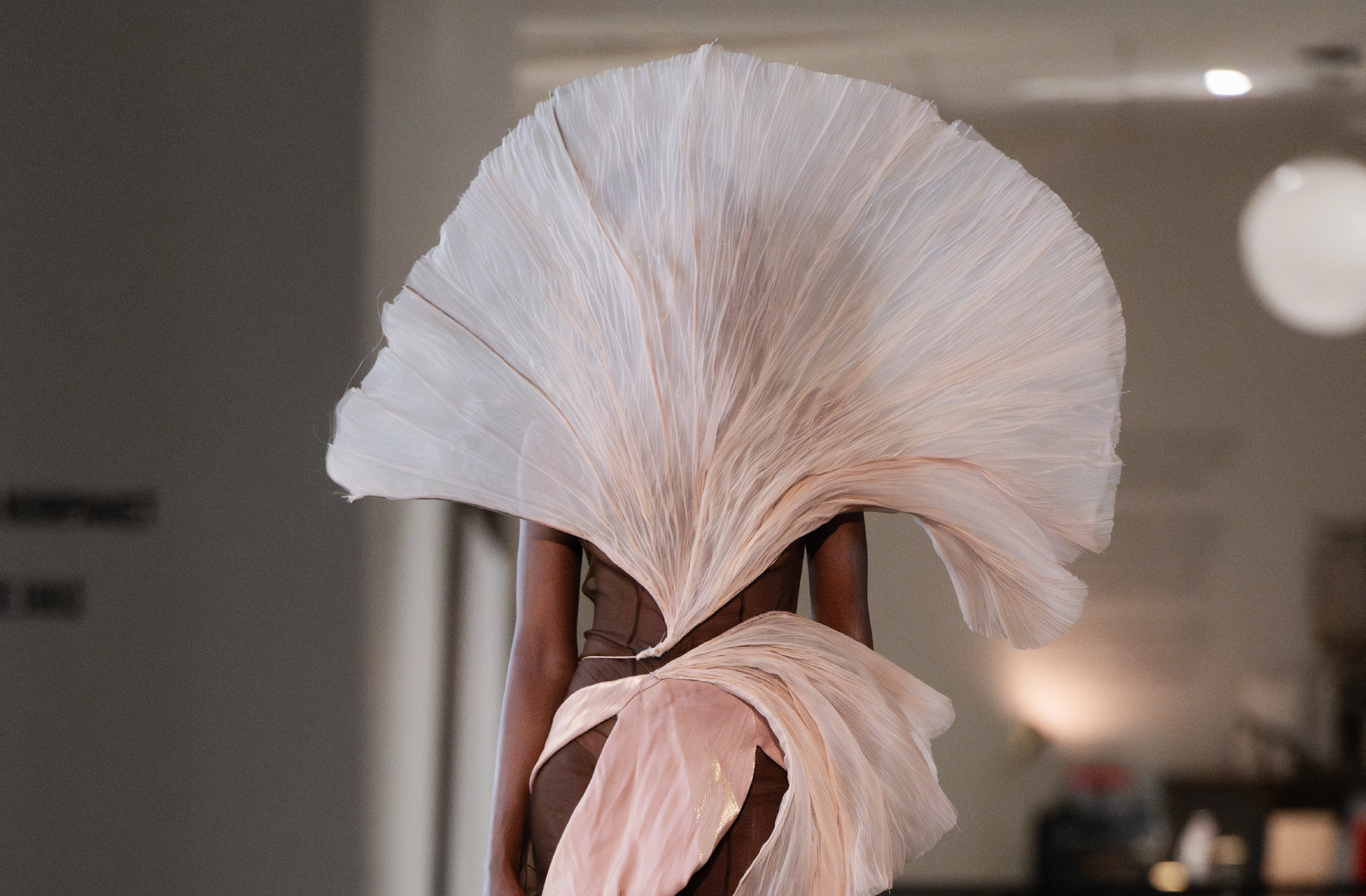
With a design language in which the body is never a passive carrier but an active co-creator, Rasmus Georgiadis moves in the space between fashion, sculpture, and movement. Silhouettes are shaped through a dialogue between anatomy, material, and wind, resulting in garments that can be experienced both as still artworks and as living expressions in motion.
In this interview, he reflects on the relationship between body and garment, his view of feminine beauty as strength and self-confidence, sustainability as emotional value, and how his time at Beckmans College of Design has shaped an expression defined by glamour, craftsmanship, and a spirit of experimentation.
The body and the garment are central to your design language. How do you approach the relationship between body, movement, and silhouette when developing your collections?
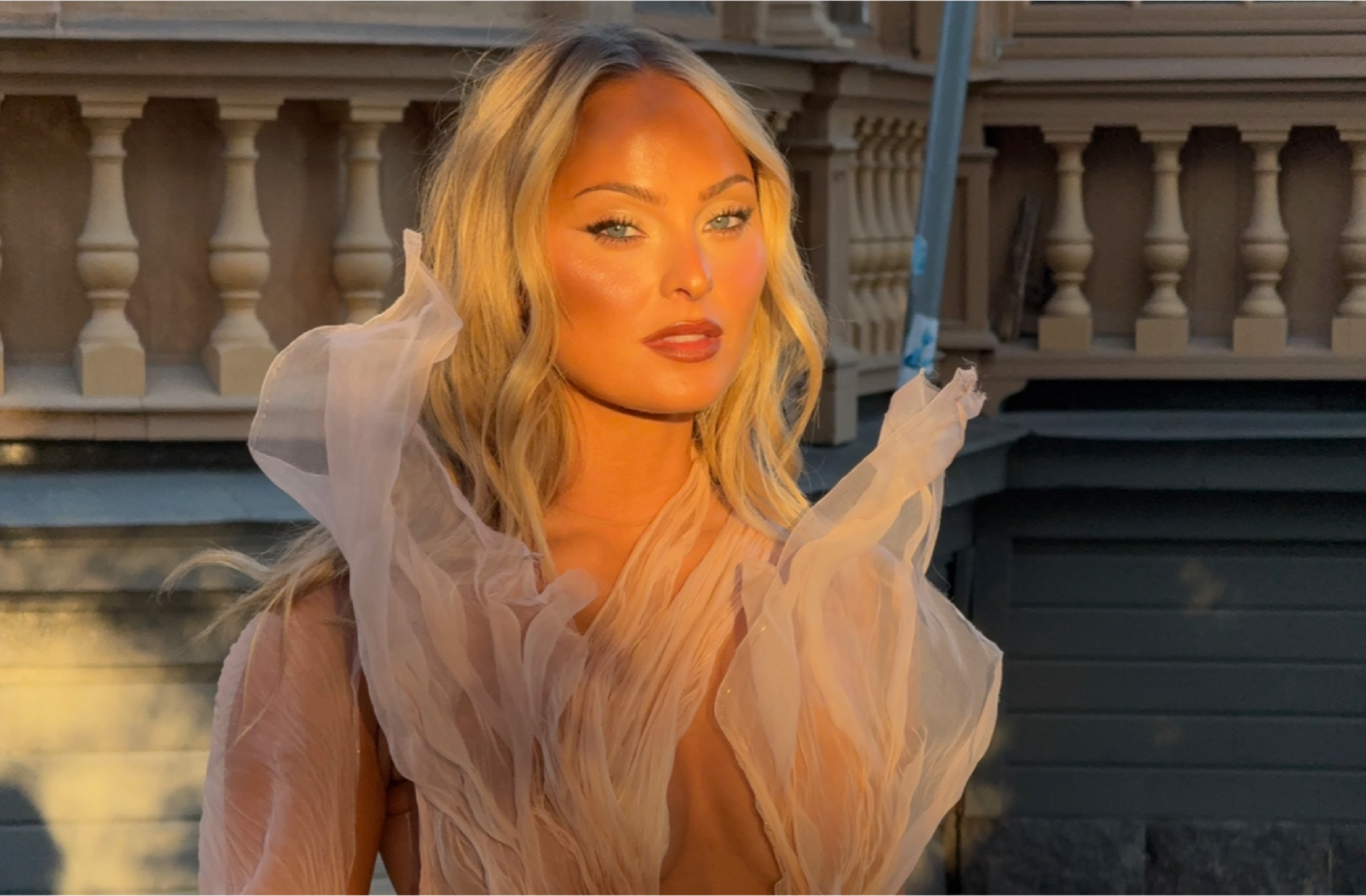
The body is definitely always a starting point for me. For me, it’s not just about dressing the body, but about creating an interaction. Anatomical lines and movement will always influence the material, and allowing them to work together to create movement and form can truly feel like a magical symphony. Many people draw references to fairies and magical beings when they see my creations. Even though this hasn’t been a foundational inspiration, I genuinely see it as a compliment.
I want my garments to take on forms that don’t always feel familiar, but rather slightly supernatural. Whether they appear as a still life when static, or seem to be draped by the wind in motion, I always want the presence of the body to be felt, to play a role just as important as the material itself.
Your garments are often described as both sculptural and feminine. How do you relate to the concept of “feminine beauty,” and how do you seek to interpret, redefine, or challenge it through your work?
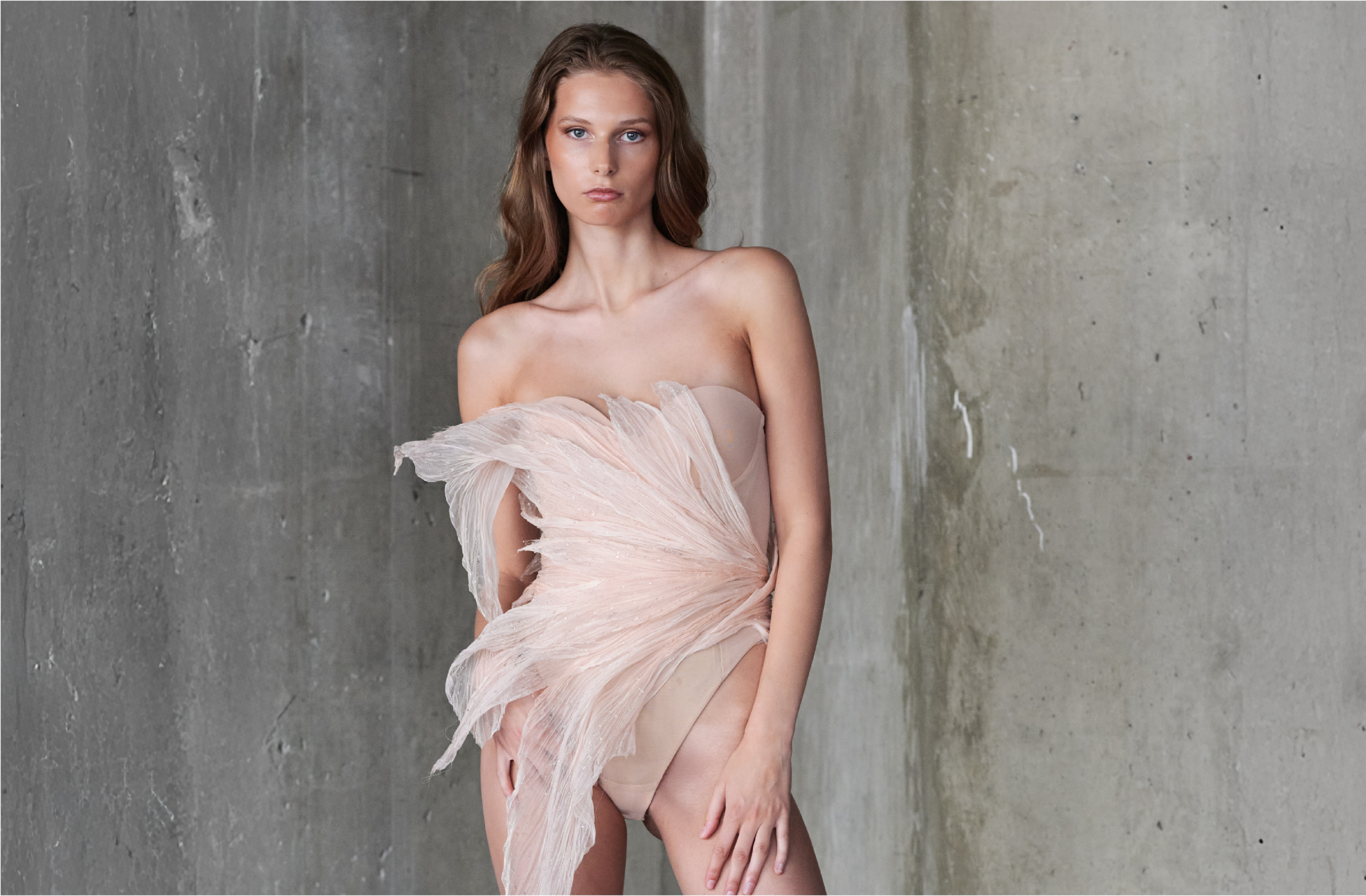
The feminine beauty in my garments exists in the interaction with the wearer, and in how the wearer is made to feel, through posture, movement, and presence.
To me, feminine beauty is a result of confidence: feeling powerful and secure in oneself. My garments are sculpted with anatomical lines in focus, to highlight what makes the wearer feel comfortable in their body. They can almost be seen as a second skin, delicate materials that offer a glamorous enhancement.
Beauty is power, and I view my garments as a form of glamorous power dressing, intended to make an entire room pause.
You have spoken about a desire to spread beauty through your creative work. How do you define beauty today, and what emotions or experiences do you hope your creations evoke in those who wear or encounter them?
Beauty is difficult to define, but to me it is a form of harmony, something that makes you stop, take it in, and admire it. In fashion, I experience beauty when the wearer, the garment, and the styling feel naturally unified, as if the individual components cannot be separated from one another.
That is exactly what I want people to feel with my design: that they don’t want to take it off, or avert their gaze. Rather, that both the wearer and the observer are encouraged to pause, absorb, and admire.
You have previously collaborated with Swedish Stockings in a sustainability project combining recycled and new materials. What role do you see sustainability playing in the future of fashion, and how do you integrate these considerations into your design process today?
I truly see sustainability as a necessity in the future of fashion in many ways. At the same time, I feel that sustainability doesn’t need to be as complicated as it’s often made out to be, nor does it have to look a certain way. Sustainability also exists in craftsmanship, and in the emotional value a garment creates.
There is immense value in being deeply in love with a garment, the kind of feeling that makes you care for it, go to great lengths to keep it alive, and never even consider letting it go.
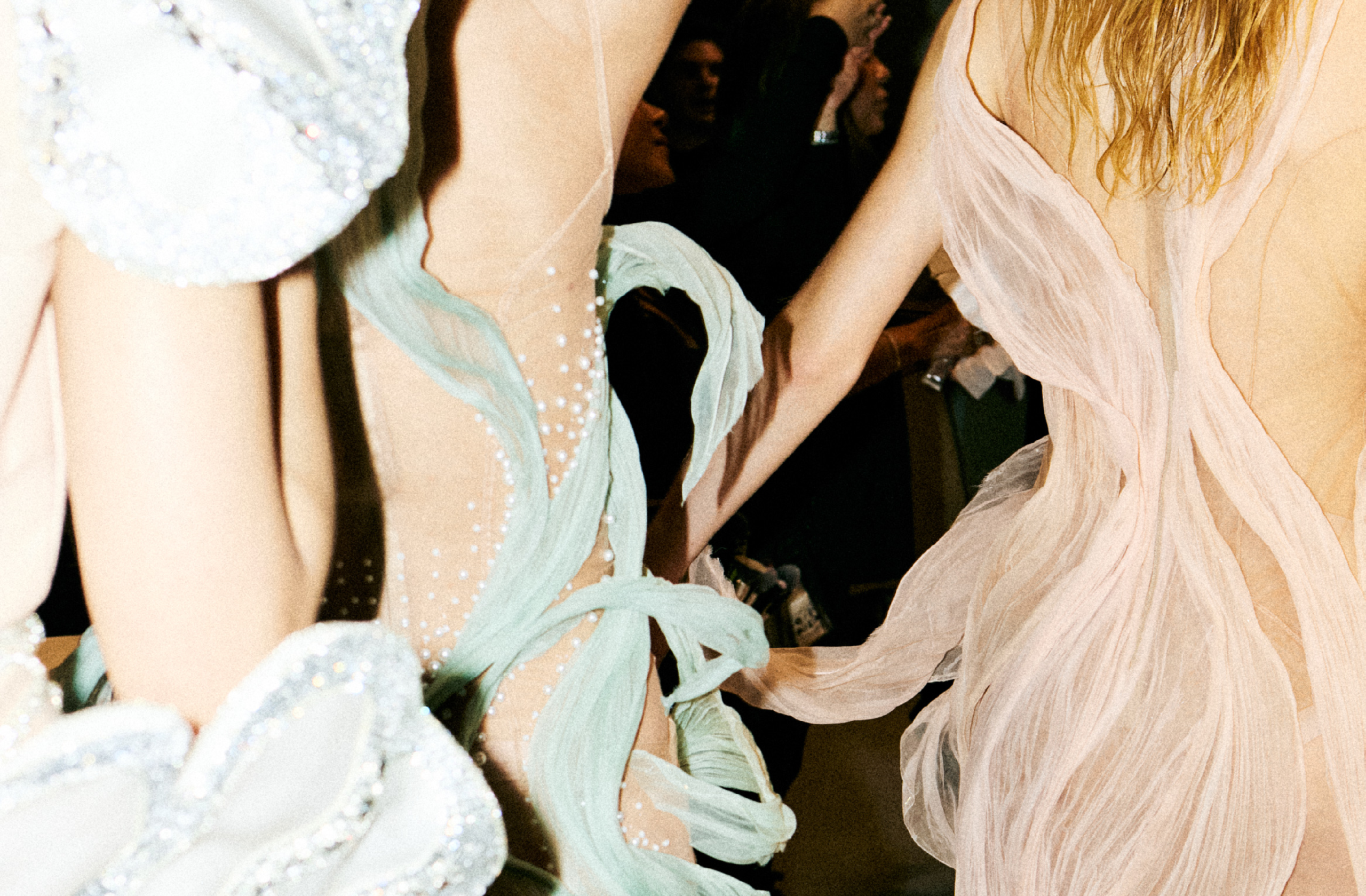
In my process, beyond creating something meant to be cherished indefinitely, I strive to keep materials as pure as possible, avoiding material blends when I can, and instead manipulating materials myself. For example, through dyeing and pleating, so that I am fully aware of what goes into each garment and can better control waste and emissions.
You studied BA Fashion Design at Beckmans College of Design in Stockholm. How has your time at Beckmans shaped you as a designer, and what insights or experiences do you carry with you into your continued work?
I used my years at Beckmans to truly experiment my way into my design language, everything from blending womenswear and menswear, challenging gender norms, to working with digital methods such as laser cutting and 3D printing. But what has stayed with me most strongly is material exploration.
I went from someone who largely accepted materials as they were, to someone who loves to manipulate texture and colour, making the possibilities of draping and form essentially endless.
I’m often asked where I find my materials, or how difficult they are to source. In reality, I find materials in the same places as everyone else, I simply work actively to make them my own.
Looking ahead, what direction do you hope your creative work will take, and what dream do you carry with you as a designer?
Going forward, I hope to give myself the time to build an even broader technical repertoire, allowing me to continue creating garments that truly make people stop and admire. Glamour and couture have always been my guiding stars, and I have no intention of turning away from them.
However, in order to keep pushing the boundaries of what a garment can be and to find new ways of creating beauty, new directions and a willingness to experiment are essential. My dream is to spread beauty across the world, with a personal ambition to make Scandinavia more glamorous, and to help as many people as possible feel like the best version of themselves.
